
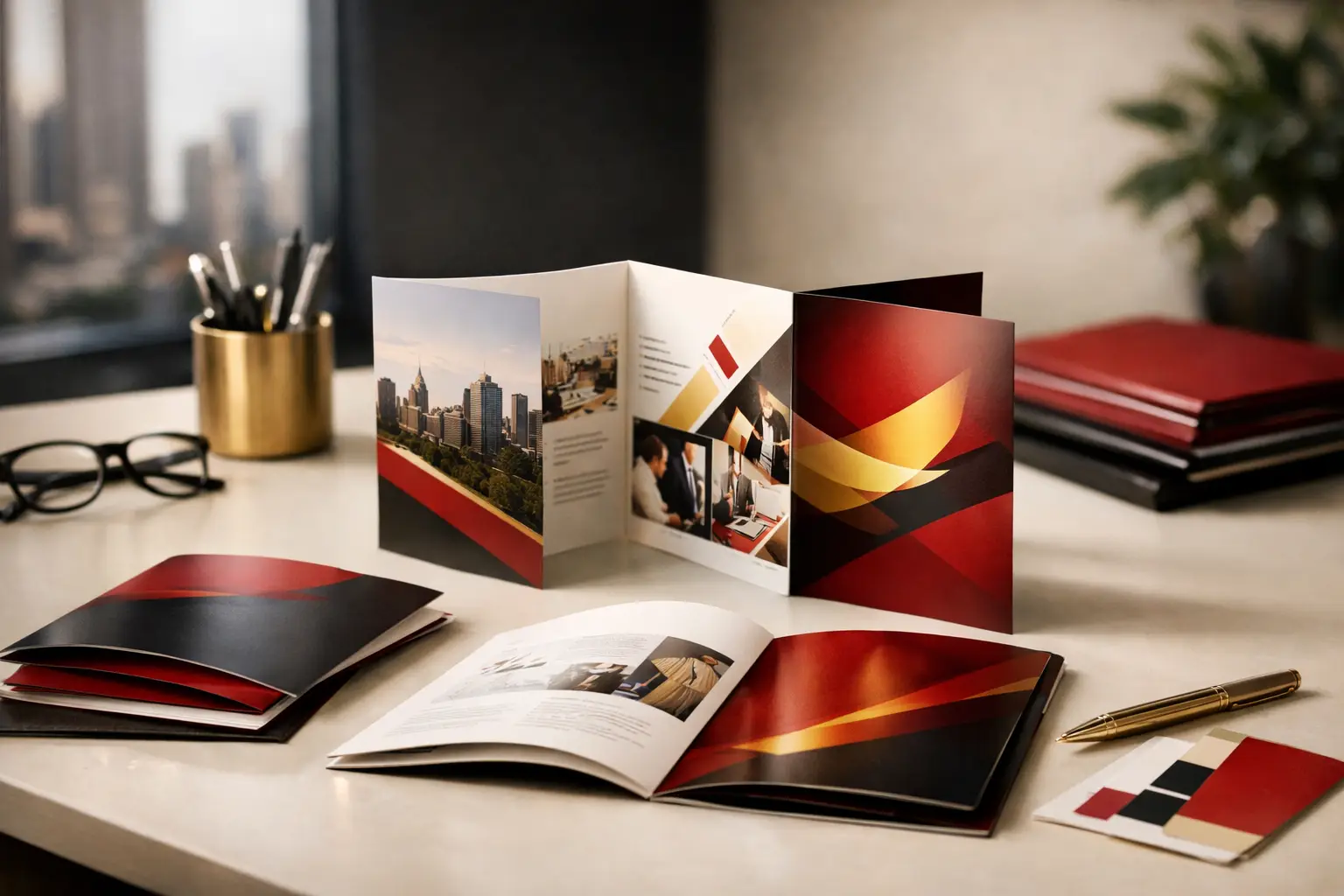
A brochure project is not layout work. It starts with what the brochure has to do and who will hand it over. The failure mode is a piece that looks good and sells nothing, so judge a studio on how it handles purpose and print production, not only on how the work looks in a portfolio.
- Starts withWhat the brochure needs to do, not the layout
- Where it goes wrongVisuals get the attention, the commercial purpose does not
- FormatNot every business needs multi-page. A folded piece often does
- Print finds weaknessesColours shift and spacing fails that looked fine as a PDF
- Best resultsWhen the brochure is not designed in isolation from the website
A brochure usually gets judged in about three seconds. Someone picks it up at a meeting, from a reception desk or out of a satchel after an expo, and they decide very quickly whether your business looks established, credible and worth contacting. That is why brochure design services Australia are not just about making something look polished. They are about creating a sales tool that makes sense in the real world, prints properly, and supports how your business actually wins work. graphic-design-print - see how we can help.
For many small and mid-sized businesses, brochures sit in an awkward spot. They are clearly important, but they often get treated as an afterthought once the website, signage or pitch deck is done. The result is familiar - outdated pricing, off-brand visuals, generic layouts, weak messaging, or files that look fine on screen and fall apart in print. If the brochure is meant to represent a capable business, that mismatch costs more than people think.
What good brochure design services in Australia should actually cover
A decent brochure project is not just layout work. It starts with understanding what the brochure needs to do. A capability statement for a service business is not the same as a product catalogue. A leave-behind for a sales rep is not the same as an A4 handout for tenders. The format, page count, stock, fold style, messaging hierarchy and print method all change depending on the job.
That matters because design decisions are not neutral. A sleek minimal layout can work well for a premium consultancy, but it may be a poor choice for a business with technical services, multiple audiences or detailed inclusions that need explaining clearly. Likewise, a highly visual brochure can look strong at first glance and still fail if the call to action is buried or the content assumes too much prior knowledge.
Proper brochure design services should cover structure, copy fit, visual hierarchy, image handling, typography, brand consistency and press-ready artwork. If any of those parts are weak, the finished piece tends to feel off, even when the colours and logo look right.
Why brochure design services Australia still matter in a digital-first market
Plenty of businesses now ask whether brochures are still worth producing at all. Sometimes the answer is no. If your offer changes weekly, your buyers only convert through digital channels, or your team never uses printed collateral, a brochure may add very little. A better website, tighter landing pages or clearer proposal templates might be the smarter investment.
But there are many cases where brochures still do real work. Trade shows, in-person consultations, medical and allied health settings, builders, professional services, education providers, property groups and B2B sales teams often need something tangible. A brochure can help prospects remember your business after a meeting, give internal stakeholders something easy to share, and present information in a more controlled way than a website skim.
It also has a credibility role. A well-designed brochure suggests your business is organised, considered and established. A sloppy one suggests the opposite. That may feel unfair, but it is how buyers assess risk.
The difference between nice-looking and commercially useful
This is where many brochure projects go sideways. The visual side gets attention, but the business purpose gets lost. A brochure is not wall art. It has to guide a reader through information in a sensible order, answer obvious objections, and make next steps clear.
Commercially useful brochure design usually does a few things well. It leads with the strongest message rather than the longest paragraph. It gives each page a job. It avoids cramming in every service, every case study and every sentence someone in the business wants included. And it balances brand presentation with readability, which is especially important if the audience includes time-poor decision-makers.
There is a trade-off here. Some businesses want every detail included because they are worried about leaving something out. Others want very light copy because they are chasing a premium feel. Both positions can work, but only if they suit the buying process. If your prospects compare suppliers carefully, they may need more substance. If the brochure is mainly there to support a conversation, less can be more.
What to look for when comparing brochure design services Australia
The obvious things matter - quality of design, consistency, and whether the work looks current. But for business owners and marketing managers, there are more practical questions worth asking.
First, can the designer work within a real brand system rather than inventing a new style every time? Brochures should feel connected to your website, proposals, signage and social assets. If each piece looks like it came from a different supplier, the brand starts to feel unreliable.
Second, do they understand production? This is where plenty of otherwise good designers get exposed. Bleed, trim, safe areas, image resolution, stock choice, finishes and pagination are not minor details. They affect whether the final piece feels sharp and professional or slightly amateur.
Third, can they help shape the content, not just place it? Most clients do not hand over perfectly structured brochure copy. They provide a mix of useful information, outdated wording and internal language that made sense in a workshop but not to buyers. A hands-on studio should be able to organise that into something clearer in plain English.
Finally, consider communication. Brochure projects often stall because approvals bounce between marketing, sales and leadership. Direct access to the person doing the work tends to reduce confusion, shorten feedback loops and keep accountability clear. That is especially useful when a brochure is part of a broader rebrand or website rollout and multiple assets need to stay aligned.
Common brochure formats and when they suit
Not every business needs a multi-page brochure. In some cases, a simple folded piece or capability statement is more useful and easier to keep current.
A tri-fold can work for concise service overviews, tourism, events or introductory collateral where quick scanning matters. An A4 capability statement suits professional services, trades, consultants and B2B firms that need a formal leave-behind or tender support document. A multi-page brochure or catalogue makes more sense when there are multiple service lines, product ranges or case studies that need room to breathe.
There is no universal best format. It depends on how your team uses it, how often information changes, and whether the goal is awareness, education or conversion support. Done properly, the format should match the business process, not the designer's preference.
Print is where weak design gets found out
A brochure that looks fine in a PDF preview can still fail once it is printed. Colours shift. Text feels smaller. Images lose punch. Margins look tighter than expected. Paper stock changes the whole impression.
That is why print knowledge matters so much. Good brochure design accounts for the physical object from the start. It considers how the fold opens, how headlines land on the page, how dark backgrounds reproduce, and whether the finish fits the audience. A luxury stock on a practical trade brochure can feel mismatched. A thin stock on a premium service brochure can make the business look cheap.
For Australian businesses, local print requirements and turnaround realities also matter. Timelines, freight, proofing and stock availability can affect project decisions. If a designer treats printing as somebody else's problem, you often end up paying for that later.
When brochure design should connect with your wider brand
The best results usually happen when brochure design is not handled in isolation. If your website says one thing, your sales brochure says another, and your signage uses a third visual style, the brand feels fragmented. Prospects may not consciously identify the problem, but they notice the inconsistency.
That is why businesses often benefit from working with a studio that can handle brand identity, website design and print collateral together. It keeps decisions aligned. Messaging becomes more consistent. Design elements get reused properly rather than copied loosely. And if the project grows into catalogue work, signage, stationery or updated digital assets, there is already a clear visual and technical foundation.
For growing businesses, this joined-up approach is often more efficient than briefing three different suppliers and trying to reconcile the outputs yourself.
The right brochure should make the next conversation easier
A brochure does not need to be flashy to work. It needs to be clear, credible and built for use. That means understanding your audience, choosing the right format, getting the print details right and making sure the content supports real sales conversations.
If you are reviewing brochure design services Australia, the practical question is not just who can make it look better. It is who can help you produce something accurate, on-brand and commercially useful without the usual agency runaround. A brochure still earns its place when it helps your business look more established and makes the next step obvious.
Need print artwork your supplier can actually use?
Brochures, catalogues, signage and campaign collateral - press-ready, colour-managed and on-brand.