
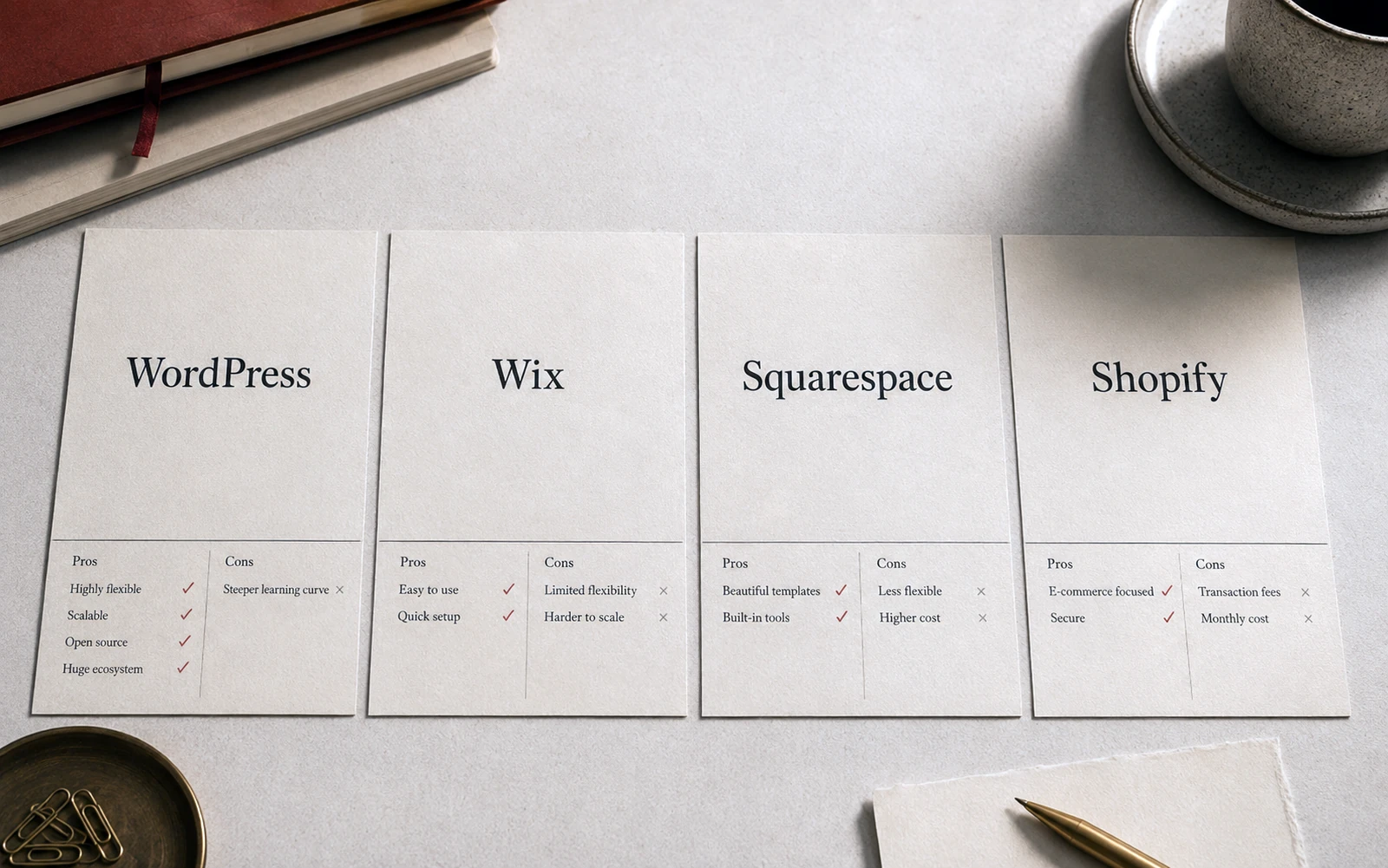
There is no single best platform, only the right fit for your plans. If you want to own your site, rank locally and grow, WordPress built properly is the strongest long-term choice. Squarespace and Wix suit simple DIY sites. Shopify suits product-first retailers, and WooCommerce a store inside a larger owned site.
- Want to own it and rankWordPress, built properly and kept updated
- Simple, tidy, doing it yourselfSquarespace or Wix
- Selling products is the businessShopify
- A store inside a bigger siteWooCommerce on WordPress
- The real trade-offOwning the platform versus renting it
- Where DIY builders fall downSEO structure, performance, accessibility and editability
The honest short answer
For most Australian small businesses that want to grow, own their site and rank well, WordPress is the strongest long-term choice. But that is not universal. Squarespace and Wix are genuinely good for simple, low-maintenance sites; Shopify is often the better call for serious online stores. Anyone who tells you one platform wins every time is selling, not advising. Below is the real trade-off for each.
WordPress
WordPress powers roughly 40% of the web for a reason: it gives you full control of design, SEO and content, and you own everything. It scales from a five-page brochure site to a large content site or a WooCommerce store, and there is no platform lock-in. The trade-off is that it needs to be built properly and kept updated - a badly built WordPress site can be slow and fragile. Built well and maintained, it is the most flexible and durable option, which is why it underpins our WordPress website design work.
Best when: you want ownership, SEO control, room to grow and content you can edit yourself. Watch out for: it rewards a good builder and a little ongoing care.
Squarespace
Squarespace is polished, design-led and genuinely pleasant to use. For a solo operator, creative or simple service business that wants a good-looking site with minimal fuss, it is a fair choice. The trade-offs are real though: less design and SEO flexibility as you grow, template constraints, and you are renting the platform rather than owning it - migrating away later is work.
Best when: you want a tidy, simple site quickly and do not expect complex growth. Watch out for: ceilings on SEO, flexibility and ownership.
Wix
Wix is the most beginner-friendly builder, with drag-and-drop editing and a huge template library. For a very small business on a tight budget doing it themselves, it can get a presentable site live fast. The honest downsides: it can produce heavier, slower pages, SEO control has historically lagged (though it has improved), and again you do not own the platform. It is a reasonable DIY starting point, less so a foundation for a growth-focused business.
Best when: DIY, minimal budget, simple needs. Watch out for: performance and long-term flexibility.
Shopify (and WooCommerce)
If selling online is the core of the business, Shopify is purpose-built for it and handles the hard parts - checkout, payments, inventory, shipping - reliably. It is often the right call for product-first retailers. The trade-off is monthly fees plus transaction costs, and less freedom outside the commerce flow. Where a business is content-and-services-led with some products, WooCommerce on WordPress keeps everything in one owned system. Neither is "better" - it depends on whether the store or the wider site is the centre of gravity.
Best when: ecommerce is the main event (Shopify) or the store lives inside a bigger content site you own (WooCommerce). Watch out for: ongoing platform and transaction costs.
DIY builders, templates and "vibe-coded" sites
AI site generators, one-click templates and quickly hand-coded sites can look impressive in a demo. For validating an idea cheaply, they have a place. But they often fall down on the boring essentials that decide real results: SEO structure, performance, accessibility, editability and maintainability. A site that looks fine but cannot be found, edited or trusted costs more to fix later than it saved up front. The value of a professional build is precisely in those unglamorous foundations.
How to actually choose
Work backwards from your plans, not the platform hype:
- Just need a simple, tidy presence and will DIY? Squarespace or Wix are reasonable.
- Want to grow, rank locally and own your site? WordPress, built properly.
- Selling products is the core business? Shopify, or WooCommerce if the store sits inside a bigger owned site.
- Not sure and want it done right the first time? Get advice before you commit - swapping platforms later is the expensive path.
For most growth-minded local businesses, that lands on WordPress - see our small business web design and website design pages, and the pricing guide for what a proper build costs.
FAQ
For growth, SEO control and ownership, usually yes. For a simple DIY site with minimal upkeep, Wix or Squarespace can be a fair choice. It depends on your plans, not on one platform being universally best.
Shopify is excellent when selling products is the core business. WooCommerce on WordPress suits businesses that are content-and-services-led with some products and want everything in one owned system.
Yes, but it is a rebuild rather than a simple export - content can be migrated, but design and structure are recreated. Choosing the right platform up front avoids paying for that twice.
Not sure which platform fits your business?
Tell us what you sell and where you want to be in two years. We will recommend the platform that actually fits - even if it is not the one we build most.