
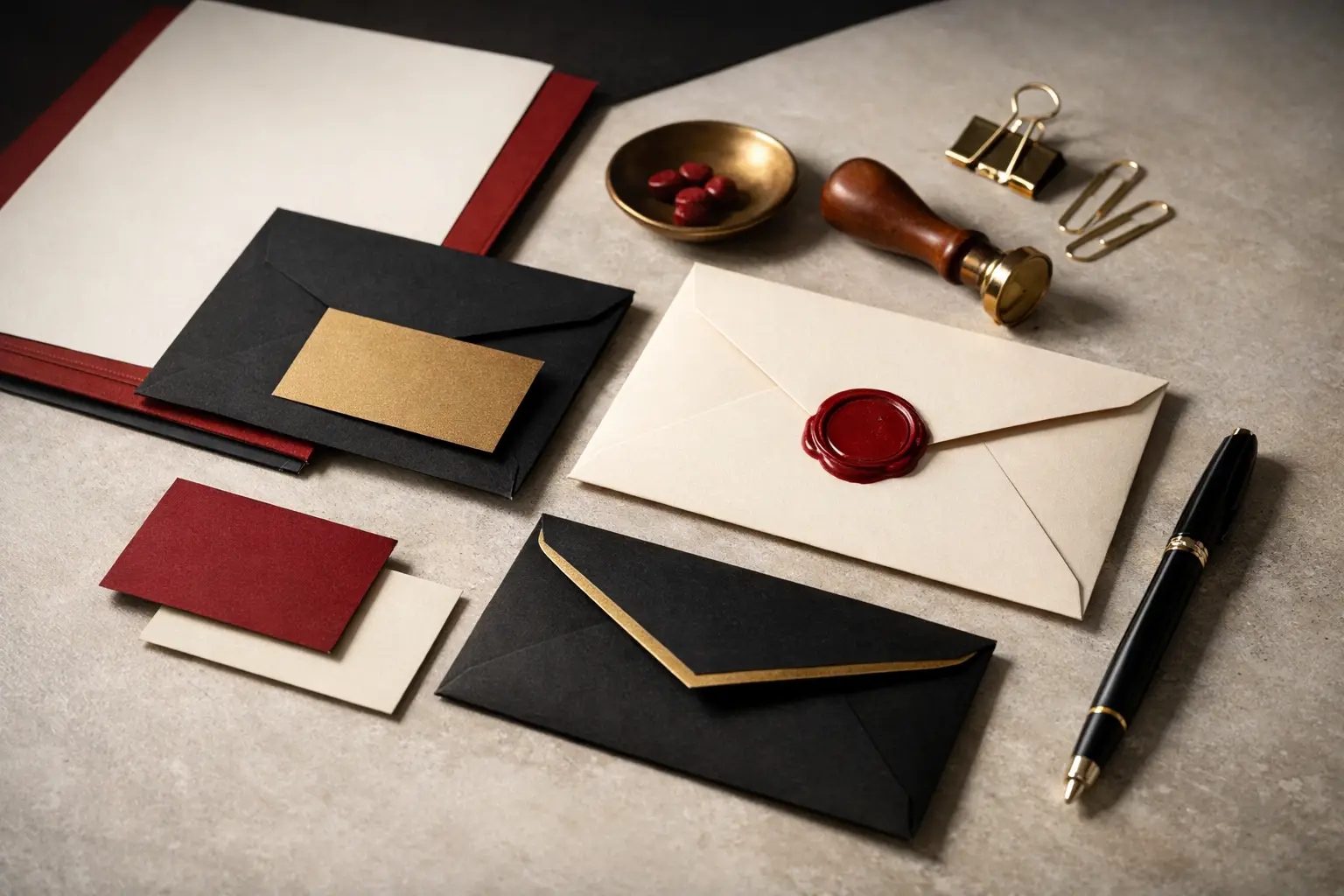
A business card handed over at a meeting still says a lot before anyone reads the text. The same goes for a quote template, a with-compliments slip, or the letterhead attached to a proposal. In business stationery design Australian companies use every day, the small details do more work than most people realise. They signal whether your brand is established, consistent and taken seriously, or whether it looks patched together.
For growing businesses, stationery is rarely just about making things look nice. It sits right in the middle of branding, sales and day-to-day operations. If your printed and digital documents don’t match your website, signage and core brand identity, the disconnect is obvious. If the files aren’t set up properly for print, the problem gets expensive.
What business stationery design in Australia actually includes
Business stationery usually starts with the basics - business cards, letterheads, email signatures, invoice templates, quote templates, proposal covers and presentation folders. Depending on the business, it can also extend to notepads, appointment cards, comp slips, envelopes, labels, presentation documents and branded forms.
What matters is not the number of pieces. It’s whether the set reflects how the business actually operates. A professional services firm may need polished proposal documents and branded tender templates. A trades business may get more value from durable site folders, quote forms and leave-behind cards. A clinic may need appointment cards, consent forms and internal document templates. Good stationery design starts with real use, not assumptions.
That’s where plenty of businesses waste money. They order a standard bundle because it sounds complete, then discover half the items never leave the cupboard while the documents staff use every day still look inconsistent.
Why business stationery design Australia-wide still matters
There’s a common assumption that stationery matters less because so much business now happens online. That’s only partly true. The role has changed, but it hasn’t disappeared.
Printed pieces still shape first impressions in meetings, sales visits, events and local service interactions. Digital stationery matters just as much. A PDF proposal, invoice or service agreement is often the first branded document a client sees in detail. If those files feel generic or messy, they quietly lower confidence.
Well-designed stationery also reduces friction inside the business. Staff know which version to use. Brand presentation stays consistent. Templates are easier to update. Print runs are less likely to go wrong because artwork has been prepared properly from the start.
For Australian SMEs, that practical side matters more than theory. Most businesses don’t need stationery that wins awards. They need stationery done properly - aligned to the brand, easy to use, and prepared for real production.
The difference between cheap artwork and proper stationery design
A lot of business stationery looks acceptable on screen and disappointing in print. That usually comes down to setup, not taste.
Proper stationery design takes into account trim, bleed, safe areas, paper stock, finishes, colour profile and print method. It also considers what happens after design approval. Can the printer produce it without fixing files? Will fine lines disappear? Will dark brand colours print consistently across coated and uncoated stock? Will the logo still hold up at small sizes?
There’s also a brand question underneath it. Stationery should feel like part of the same system as your website, signage, brochure, capability statement and social presence. If the typography, spacing and colour handling change from piece to piece, the business starts to look less established than it is.
This is where a senior designer makes a difference. Not because stationery is glamorous, but because it’s full of small judgement calls that affect quality and usability.
How to approach business stationery design Australian businesses can actually use
The most effective approach is to start with what your team sends, prints or hands out regularly. That sounds obvious, but it’s often skipped.
If a business wins work through formal quotes and proposals, those templates deserve more attention than a ceremonial letterhead. If directors attend networking events and industry meetings, business cards still have value. If most communication happens digitally, it may make sense to invest more in branded document templates and email signature systems than in bulky print packs.
Design should then follow the broader brand system. That includes logo use, colour palette, type hierarchy, spacing rules, imagery style and tone of voice. Stationery is not a separate visual exercise. It’s one expression of the brand.
From there, file preparation matters. Editable versions need to be practical for staff. Print-ready versions need to be clean and accurate. If there are multiple office locations, departments or staff names, the system needs to allow for those variations without becoming hard to manage.
For businesses with more operational complexity, this can go further. Document templates may need to connect with quoting workflows, CRM outputs, report generation or internal software. In those cases, design and technical delivery can’t be treated as separate conversations.
Common mistakes in business stationery design in Australia
The first mistake is designing stationery before the brand identity is settled. If the logo, colours and typography are still moving around, stationery becomes a rework job.
The second is using different suppliers for every piece without anyone controlling consistency. The website looks one way, the brochure another, the business card another again. Individually they may be fine. Together they weaken the brand.
The third is prioritising novelty over legibility. Foils, textured stocks and unusual layouts can work, but not when they interfere with readability, writing space or print reliability. This is especially relevant for business cards and forms, where function matters.
The fourth is forgetting reordering and updates. Staff change. phone numbers change. Office details change. If the files are locked up in awkward formats or no one knows what was printed last time, simple updates become a chore.
Finally, many businesses approve digital proofs without asking the practical questions. What stock is this going on? How will this colour reproduce? Is this intended for office printing, commercial printing or both? It depends on the item, but those decisions should be made early.
Choosing the right stationery set for your business
There isn’t a universal stationery package that suits every business. A consultancy, a manufacturer and a medical practice will all need different things.
A smaller service business may only need refined business cards, a clean letterhead, a branded quote template and a consistent email signature. A more established company with sales teams, tenders or printed leave-behinds might need folders, branded forms, presentation sheets and multiple staff variations. If the business is mid-rebrand, it may be smarter to phase the rollout rather than replace every item at once.
That staged approach is often the better commercial decision. High-visibility items can be updated first, while lower-priority collateral is replaced as stock runs out. You still get consistency where it counts without unnecessary waste.
For businesses in Brisbane, Ipswich or Logan, there can also be practical value in working with a studio that understands local print expectations while designing for national use. The main point, though, is clear communication and accountable delivery. No agency runaround, no vague handoff between designer and production.
What to look for in a stationery design provider
Look for someone who asks how the materials will be used, not just what you want designed. That usually tells you whether the work will be strategic and practical or just decorative.
You also want direct guidance on print setup, file types, template usability and rollout. If the provider can handle brand identity, print collateral and digital assets together, the result is usually more cohesive. That matters when your stationery needs to sit comfortably beside your website and other marketing materials.
A good provider should also be straightforward about trade-offs. Premium finishes can elevate a business card, but they’re not always necessary. Heavier stock can feel more substantial, but it may not suit every print run or budget. Editable templates are useful, but only if your team can maintain them without breaking the layout.
At Lovely Pixel, that kind of work is handled with the same thinking applied to broader brand and web projects - practical decisions, press-ready files and clear recommendations in plain English.
Business stationery design Australian businesses should treat as part of the brand system
The strongest stationery doesn’t fight for attention. It supports the brand quietly and consistently. It helps your business look more established, makes documents easier to use, and removes the rough edges that chip away at credibility.
If your current cards, templates and printed materials feel inconsistent, dated or awkward to reorder, that’s usually a sign the system needs attention rather than another quick fix. Get the foundations right, and the everyday pieces start doing their job properly.
Need help with your website or branding?
We design WordPress sites, brand identities and print collateral for Australian businesses.